
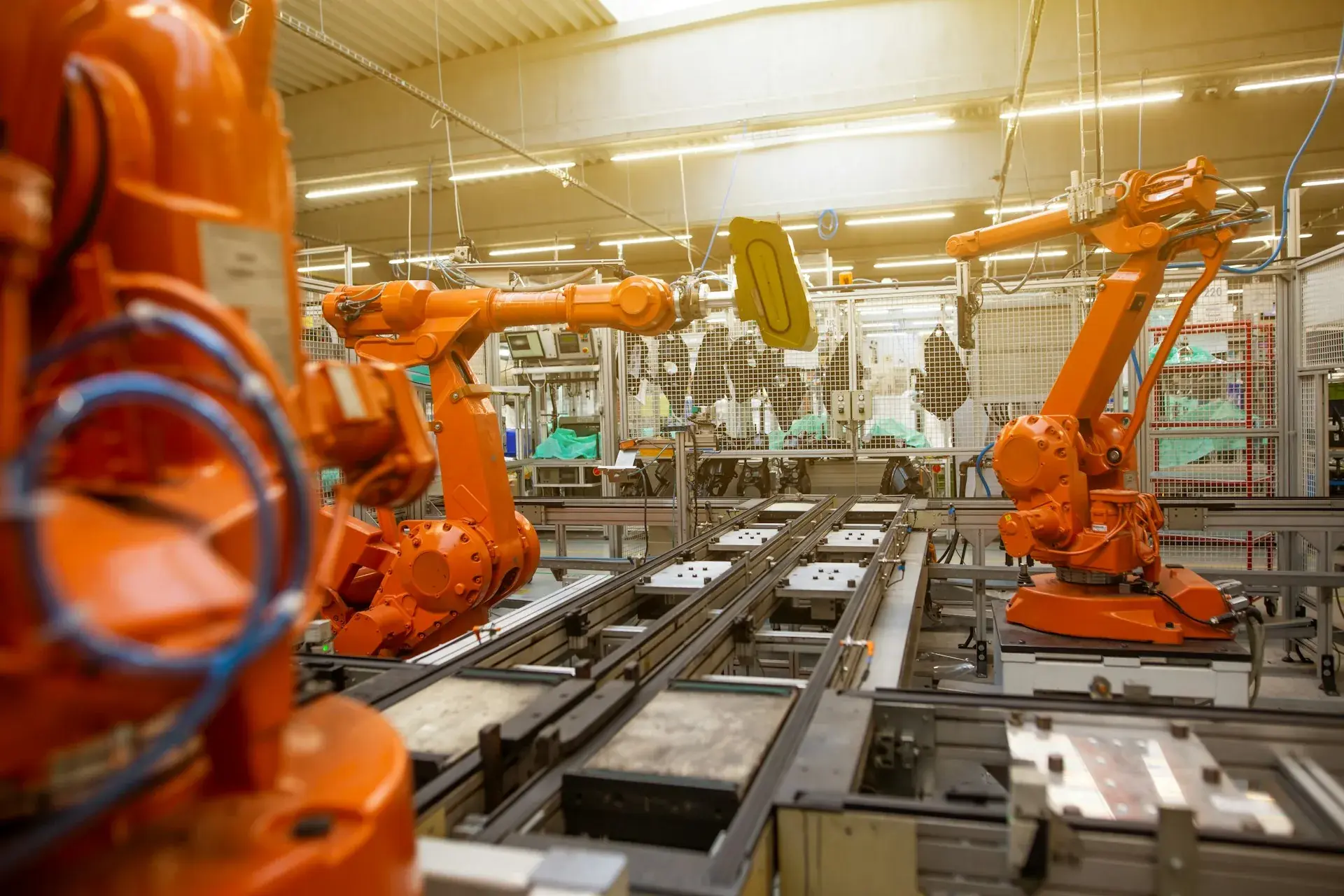
Case Study: Streamlining Shop Floor Insights
How we built user-friendly PowerApps and Dynamics 365 workflows to enable real-time downtime tracking and data capture.
The Client
Empowering operators with digital tools across global manufacturing lines.
The client is a leading manufacturing enterprise with global operations spanning multiple plants and specialized production lines. They manufacture high-precision components under strict quality standards. On their factory floors, operators run complex machinery and coordinate assembly steps, relying on interactive kiosks and central dashboards to track productivity, report equipment status, and manage their daily throughput.
In modern manufacturing, plant efficiency is heavily dependent on real-time operator feedback. If a line goes down due to a mechanical breakdown, material shortage, or tooling failure, that delay must be logged immediately so maintenance teams can respond. Because the client operates at scale, even minor delays across their manufacturing lines can compound into significant daily production deficits, making fast, accurate reporting crucial to their bottom line.
To maintain their competitive edge, the client required a system that operators could use directly on the shop floor. They needed to replace their administrative overhead with streamlined, visual interfaces that fit seamlessly into the active, high-pressure environment of the factory floor, allowing operators to focus on production while keeping management informed.
The Challenge
The visibility bottleneck on the manufacturing floor.
Before the engagement, the client faced a significant visibility gap across their production sites. Without a modern Manufacturing Execution System (MES) in place, plant managers struggled to capture a granular view of operations. Downtime events were recorded manually on paper logbooks or legacy spreadsheets, which were only compiled and reviewed at the end of each shift or week.
This delayed reporting made it impossible to address line issues proactively. If a machine experienced micro-stoppages, operators had no simple way to report them, resulting in lost productivity that went unanalyzed. Furthermore, the legacy software interfaces available on their shop floor kiosks were complex, non-intuitive, and required extensive training, leading to poor user adoption and inconsistent data logging.
Legacy shop floor systems were complex and difficult for machine operators to use.
Tracking downtime causes was highly manual and inaccurate due to the lack of an MES.
Plant managers had no real-time visibility into active line performance and productivity.
Paper-based logbooks delayed analysis, preventing timely operational adjustments.
What our audit found
Exposing the gap between machine operations and digital records.
We began the project by conducting on-site operational reviews, observing how operators interacted with the existing kiosks, and identifying where data capture fell apart. Our diagnostic revealed that the lack of standard inputs was the root cause of their data quality issues. When logging downtime, different operators typed different descriptions for the same mechanical problem, making it impossible to perform automated categorization.
Additionally, the physical kiosks lacked a responsive GUI, making data entry slow and frustrating for workers wearing protective equipment. Because the systems were disconnected from their core enterprise database, any entered logs had to be manually verified and re-entered by supervisors, introducing data errors and wasting administrative hours.
Non-standardized data entry led to inconsistent downtime logs that could not be aggregated.
Non-responsive UI on shop floor kiosks discouraged real-time data entry.
Disconnect between floor kiosks and backend ERP tools required duplicate manual inputs.
Micro-stoppages were completely unrecorded, obscuring the primary causes of line inefficiencies.
The Solution
How we turned it around.
Cloud Integration with Microsoft Azure and Dynamics 365
To resolve the data disconnect, we designed a secure, scalable cloud architecture utilizing Microsoft Azure and Dynamics 365. This infrastructure serves as the central data hub, connecting active shop floor terminals directly to the client's enterprise databases. By leveraging Azure, we ensured high availability and secure data transit from multiple physical plants into a single database.
What we shipped
- Deployed a secure data layer on Microsoft Azure to collect and store plant telemetry.
- Integrated Dynamics 365 to align shop floor data with core warehouse and inventory records.
- Configured secure API connections to allow safe data transmission from external plants.
- Established a scalable foundation capable of handling simultaneous inputs from multiple lines.
Custom Power Platform Kiosks and Workflows
We replaced the legacy kiosk interfaces with a user-friendly Canvas PowerApp tailored for tablet and touchscreen kiosks. The application features large, touch-optimized buttons and a visual interface that allows operators to log downtime events and classify causes in just a few taps. Backed by Power Automate flows, the system routes notifications to maintenance supervisors immediately when critical downtime events are logged.
What we shipped
- Developed a touch-friendly Canvas PowerApp for fast data entry on the shop floor.
- Built automated Power Automate flows to send instant alerts to supervisors when lines stall.
- Designed custom connectors to bridge the app with local shop floor hardware.
- Enabled operators to view active line performance metrics directly on the kiosk home screen.
Standardizing the Shop Floor Data Entry Framework
To ensure data consistency, we established a standardized data framework for all operator inputs. We replaced free-form text boxes with pre-defined dropdown menus, categorized by machine type, error codes, and operational status. This standardized input method ensures that every logged event contains consistent, structured data, enabling automated reporting and real-time downtime classification.
What we shipped
- Created a structured data entry model to eliminate free-form text discrepancies.
- Implemented automated error-code mapping for precise downtime classification.
- Standardized templates across all manufacturing lines to ensure comparative analytics.
- Structured data tables to facilitate seamless integration into future MES tools.
The Numbers
Outcomes we can talk about.
The deployment of the new Power Platform and Azure-based data framework transformed how the client tracks shop floor activity. By replacing manual spreadsheets with responsive Canvas applications, the client eliminated the data entry lag that previously delayed shift reporting. Plant operators now interact with a system designed for their environment, leading to consistent data logging and immediate reporting of line interruptions.
With standardized data entry templates, management can monitor, classify, and address machine downtimes in real time. Rather than waiting for weekly reports, plant managers can review active line performance across plants from a unified dashboard, enabling them to make quick operational adjustments, optimize plant layouts, and allocate maintenance teams to high-priority issues.
Note on Metrics: Due to the client's internal security guidelines and the operational nature of this pilot, direct quantitative performance metrics were restricted from public release. The success of the project was measured qualitatively by the successful rollout of the touchscreen kiosks across all active lines, the complete elimination of manual paper logs, and the creation of a clean, structured database layout that is fully prepared for future MES integration.
What We Built
What's Next
Laying the groundwork for complete MES automation.
With the data framework established and kiosks fully adopted, the client is planning to integrate physical machine sensors directly into the Azure data pipeline. This will enable automated downtime triggers, logging stoppages without requiring manual operator intervention.
Additionally, the standardized data collected through the Power Platform will be used to train predictive maintenance models. By analyzing historical downtime patterns, the system will eventually predict potential equipment failures before they cause line stoppages, transitioning the client's maintenance team from a reactive model to a proactive, predictive workflow.
Frequently Asked Questions
About This Project
The questions teams usually ask when they want to run a similar engagement.
A Canvas PowerApp is a highly customizable, low-code interface builder. In this engagement, we used it to create custom, touch-friendly kiosk dashboards specifically designed for factory floor operators to quickly input data.
The Real Numbers
Need real numbers? Let's talk.
We kept the names off the page. The story is real, the outcomes are real, and we're always happy to walk a serious team through the rest of it.
Start a Conversation→More from Engineering

Cypress UI Automation: Accelerating Testing for a MERN Platform

Automating Customer Updates for Sales Success

Automating & Enhancing Sales Workflow
Insights from our blog
 Technology
BMC Remedy to ServiceNow: What Changes During Migration?
Understand what changes during a BMC Remedy to ServiceNow migration, from data and workflows to CMDB, integrations, permissions, and cutover.
 Artificial Intelligence
Why Most AI Investments Don't Survive Year Two: What P&L Owners Get Wrong
Explore why AI investments lose momentum after pilots and how P&L owners can build accountable business cases designed for sustainable ROI.
 Artificial Intelligence
Agentic AI vs. Marketing Automation: A Feature-by-Feature Breakdown for B2B Teams
“Agentic AI” has started showing up in the same sentence as “marketing automation” so often that the two are getting treated as interchangeable. They aren't, and for a B2B team deciding where to spend the next automation budget, the difference isn't academic - it changes what the system can do without you, what it needs from you to run safely, and which one actually fits a long, multi-stakeholder B2B sales cycle.