

AI & Intelligent Engineering Built for Reasoning.
We engineer and operate the intelligence layer inside your existing stack: NLP, computer vision, and autonomous agents running reliably in production with guardrails and continuous evaluation.
Proven Performance Metrics
Why AI Engineering Matters Now
The Old Way
Without production-ready AI engineering
The Intelegencia Way
With Intelegencia
How We Engineer AI Into Production
Three disciplines run in parallel on every engagement: choosing and adapting the right model, grounding its reasoning in your data, and keeping accuracy measurable over time. Each one is a dependency for the others, so we staff them concurrently, not sequentially.
Model Selection
We match model architecture to the task, then fine-tune on your domain data when off-the-shelf accuracy falls short.
- Build-vs-fine-tune evaluation against your data
- Domain adaptation and instruction tuning
- Latency and cost profiling per model variant
- Multi-model routing for mixed workloads
Build & Ground
We wire the model into your stack with RAG pipelines, tool integrations, and guardrails that keep outputs grounded in your enterprise data.
- RAG pipelines against your knowledge bases and data stores
- Agent orchestration and multi-step tool use
- Output guardrails tied to your business rules
- Data residency controls so your content stays where it belongs
Eval & Monitor
We instrument every model with evaluation harnesses and drift detection so accuracy is a number you can see, not a feeling.
- Automated regression suites on every model update
- Drift detection on input distribution and output quality
- Human-review sampling workflows for high-stakes outputs
- Cost and latency dashboards per inference endpoint
The Intelligence Layer for Your Stack
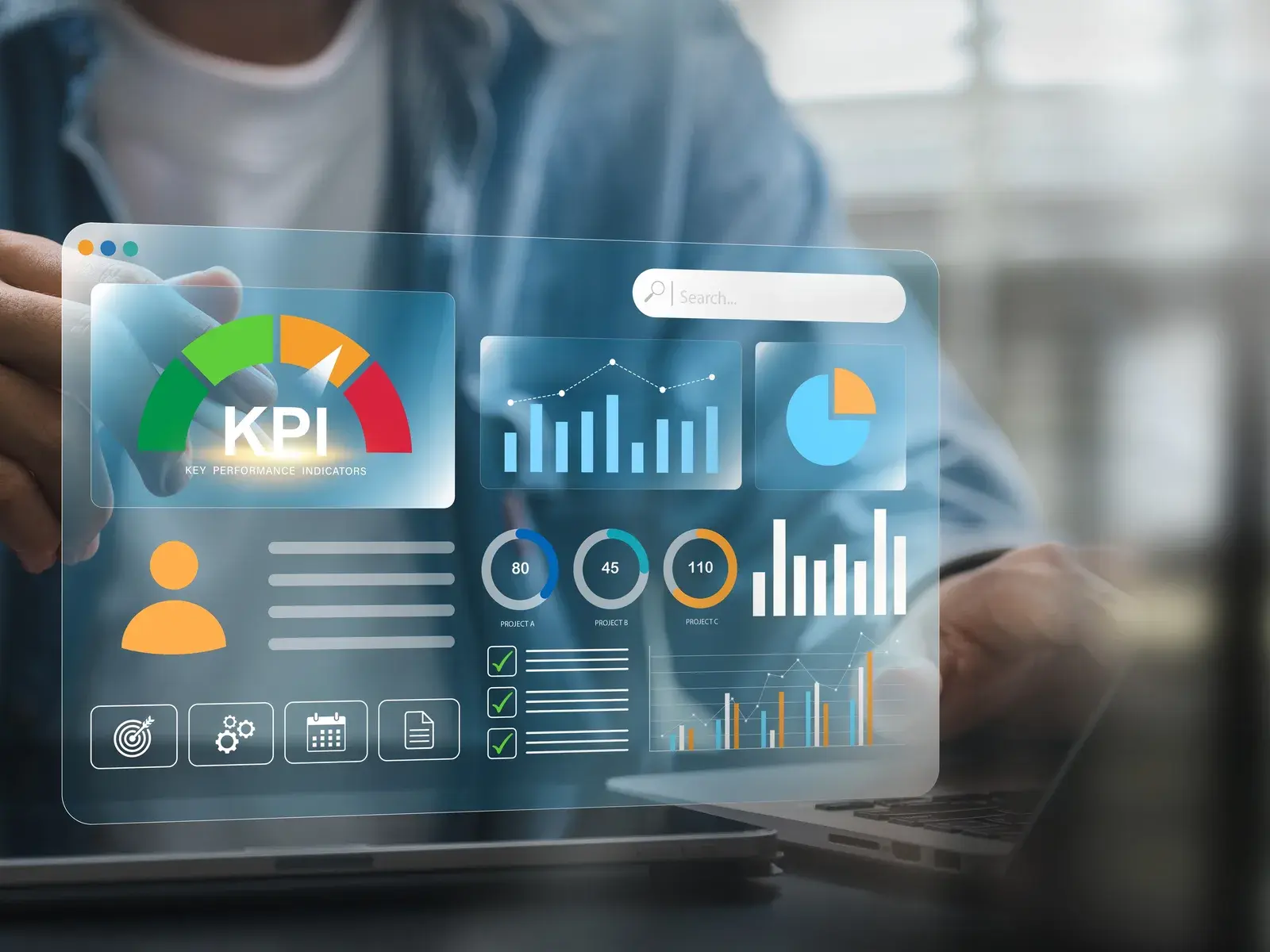
We embed NLP, computer vision, and autonomous agents directly into your existing applications, fine-tuning models on your domain data so they understand your terminology, extract structure from your documents, and execute multi-step workflows without manual handoffs. The result is software that handles the cognitive work your teams currently do by hand.

From Passive Tools to Systems That Act
Retrieval-augmented decisioning grounds every output in your enterprise data and business rules, so answers cite a source and a human reviewer can trace the logic. Automated evaluation runs on a schedule, flagging accuracy drops or distribution shift before they reach end users, which keeps model performance stable across quarters, not just at launch.
Driving Measurable Business Outcomes
Explore the specialized capabilities within this service, each engineered to deliver measurable business outcomes at enterprise scale.
Transforming unstructured text into actionable intelligence with custom-trained LLMs and sophisticated linguistic pipelines, fine-tuned on your domain to extract the entities, sentiment, and meaning that generic models routinely miss.
Your AI Engineering Roadmap
Four stages take you from a working pilot to a maintained capability in production. Each stage has clear exit criteria, so you know exactly when you are ready to move forward and what it will cost to get there.
- 01
Diagnose
We audit your existing pilot, data quality, and infra constraints to define what production-readiness actually requires.
- 02
Instrument
We add evaluation harnesses and baseline metrics before writing a line of production code, so progress is measurable from day one.
- 03
Deploy
We move the model into your stack with load testing, guardrails, and a staged rollout to a controlled user segment.
- 04
Sustain
We hand over a monitored, documented system with drift alerts and a cadenced retraining schedule your team can own.
The AI Engineering Operating Model
Delivering AI to production is a discipline, not a one-time event. Our operating model embeds governance, reproducibility, and accountability into every phase so the capability holds up as your data, traffic, and requirements change.
Phase 01
Scope
Define accuracy targets, latency budgets, data access boundaries, and risk tier before any model is selected.
Phase 02
Build
Develop, fine-tune, and integrate the model with reproducible pipelines and version-controlled artifacts.
Phase 03
Validate
Run structured evals, red-team adversarial inputs, and load tests before any traffic touches the system.
Phase 04
Operate
Monitor drift, manage retraining cycles, and report on accuracy and cost at a cadence you set.
Case Studies That Deliver the Real Story
Explore our case studies to see how we empower businesses by creating unique, cutting-edge solutions that drive growth, efficiency, and success.



Ready to see what
Intelegencia can do for your business?
Let's turn your toughest challenges into measurable outcomes. Talk to our team and discover how the right partnership can accelerate your next move.
Frequently Asked Questions
About AI & Intelligent Engineering
Here you will find answers to questions we get asked the most about our offerings.
We instrument every deployed model with statistical drift detection on both input distributions and output quality scores. When either moves outside the agreed threshold, an alert fires before accuracy visibly degrades. Depending on the risk tier, that triggers an automated retraining job, a human review queue, or both. We also schedule periodic eval runs against a held-out test set so degradation does not hide between alerts.